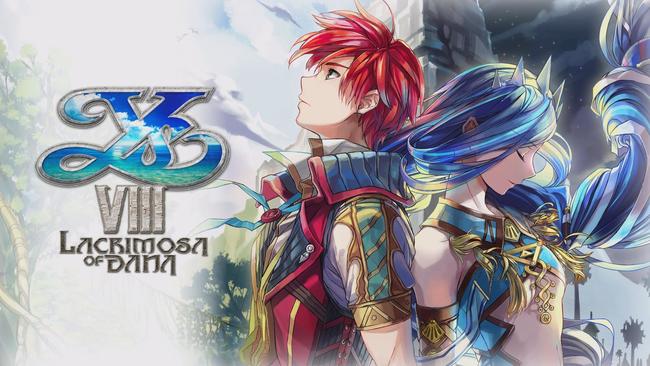
Ys VIII: Lacrimosa of Dana – Review

Last weekend, I decided to play Ys VIII: Lacrimosa of Dana on a whim. Let me tell you, this might be the most slept on JRPG of 2019.

How should I describe Ys VIII? At its core, it is an action-focused, semi-open world, Japanese role playing game. In layman’s term, Ys VIII is comparable to an anime-draped over Monster Hunter World with an appealing story.

Similar to the 1951 film titled Lost Continent directed by Sam Newfield, the game’s plot surrounds a lost island, untouched by human, and inhabited by ancient species known as Primordials (basically dinosaurs). The story starts with the main protagonist, Adol Christin, on a massive boat. As a thrill seeking adventurer, Adol is setting on his eighth journey to explore all nooks and crannies from the Romun Empire to the Vortex of Canaan. Having forced to travel through the game’s own Bermuda Triangle, our protagonist’s boat was attacked by a mysterious sea monster, resulting in the ship ‘s destruction, and throwing all members overboard.

The rest of the story has you traversing the Isle of Seiren where Adol washed up, in search for surviving members of the Lombardia (the ship you were on), and discovering vital assets to surviving on this foreign island. Rather than settling on a linear path to disclose the game’s story, Falcom decided on a mechanic that has the player backtracking to unlock new areas in previous locations to progress the story.

Not gonna lie, I was taken back by this approach at first. As seen in many service-based games that are focused on action-based gameplay while neglecting the task of delivering a story, this mechanic allows the player to repeatedly gather at a main hub, to then set out to take on incrementally more challenging monsters. “Ugh, this is going to suck”, I thought to myself after my first hour. Much to my surprise, this mechanic went perfectly hand in hand with the game’s story delivery. As soon as I was fatigued from all the charting that Adol has to do, the game immediately rewards you with a raid (where you will have to return to the main hub) where I could save and pause to do something else, or dive directly deeper into the plot.

Trailer of Ys VIII: Lacrimosa of DANA on launch day.

Where the game shines the brightest, however, is in its combination of fantastic story telling and Ys’s franchise-defining action gameplay. To play Ys VIII is like admiring and devouring a delicious flan. The swiftness in which all six playable characters move and fight is proportionate to the flan’s smooth, shiny and silky texture. The game’s story is analogous to the rich and golden caramel, enhancing each enticing bite into the gelatinous egg custard.

Simply put, Ys VIII: Lacrimosa of Dana might be one of the best contemporary action-JRPG currently out on the market. The game’s combination of both story and gameplay delivers a satisfying, relax and yet challenging, roughly 40 hours of JRPG heaven. If you are a maddening JRPG fan as I am, you really are missing out by not having played this game.
Dear Nintendo’s Developers and Executives,

My friends are getting fed up with you. While they represent a select few, their complaints, however, resemble a growing concern within the community for each new successor to the Pokémon series. The franchise has been around for as long as millennials have and thus pains me to think that this endearing relationship may sour one day, if it hasn’t started to already.

Since the game’s release in November, I’ve begun a gradual build up of frustration by constantly having to defend why the newest edition of Pokémon is a good. Despite the Internet criticisms of “Dexit” and at times muddy and low resolution textures, Pokémon as a franchise has evolved significantly in Sword and Shield. Not only do Pokémons now physically appear in front of my avatar (something I’ve dreamed about since Red/Blue), the inclusion of raid dens from Pokémon Go has also allowed for a level of cooperation between players that this franchise has never experienced.

And while some are complaining about Sword’s and Shield’s numerous “game-breaking” glitches, I am heralding these exact glitches for eradicating barriers to entry into online competitive Pokémon battles. As a beginner to the competitive scene, I am thankful that Sword and Shield allow me to forgo traditional method of EV training through access to Poké jobs and raid dens time glitch. I am grateful that I am able to force spawn GMAX raid dens, rather than miserably and endlessly hoping for one to appear.

There is one vital factor, however, that is holding Sword and Shield back from achieving that “Game of the Year” title in the hearts of Millennials going forward (or even at the annual Game Award show). No, it has nothing to do with its game mechanics. In fact, Pokémon’s simple to grasp, yet difficult to master, multi-dimensional rock-paper-scissors formula is timeless. The franchise’s downfall has entirely to do with its roots as a Japanese Role Playing Game, more specifically, it has to do with the storyline of Pokémon games.

I understand that Pokémon is rated “E” for everyone. I understand that the franchise’s main driver of sales may no longer be the games themselves, but are in fact their plushies, t-shirts and other merchandises. As much as it pains me to admit, the games, animes and mangas are simply tools to achieve this mean. But to use the excuse that Pokémon is a game for children, thus we shouldn’t expect a rich and engaging story is inexcusable. To better understanding this argument, one simply need to look at Disney’s and Pixar’s formula of producing animate films. These inherently are entertainment for children (those of the same demographic that Nintendo is targeting), however, with capacity to engage older audiences. Big Hero Six, Frozen, Toy Story are all marvelous example of narratives directed at children, but are enjoyable, engaging and heart warming to all age groups. In my experience with the Sword and Shield, the game’s narrative felt inconsequential, lackadaisical, while a few aspect of the story just straight up needed to be flush out better. For example, why did Chairman Rose want the Galar region to be engulfed in light again? What happened to him after our protagonist spoiled his plan? How can the people of Galar still consider him to be a good guy after all that? Who are those spoiled-looking, white men that appeared in the post-game and why weren’t they introduced earlier in the game?

Many of these questions should have been answered before the release of this game. In Nintendo’s defense, they have done an amazing job with one of my favorite video game franchise of all time. To me, they have just gotten that much closer to that GOTY product. What is lacking is a well thought out, and heart warming story. A story that is capable of going head to head with the likes of FFVII, Chrono Trigger, or Dragon Quest XI. I believe that this is how Nintendo can maintain us millennials’ engagement in the coming future.

PS: maybe adding a variety of difficulty settings will help as well.

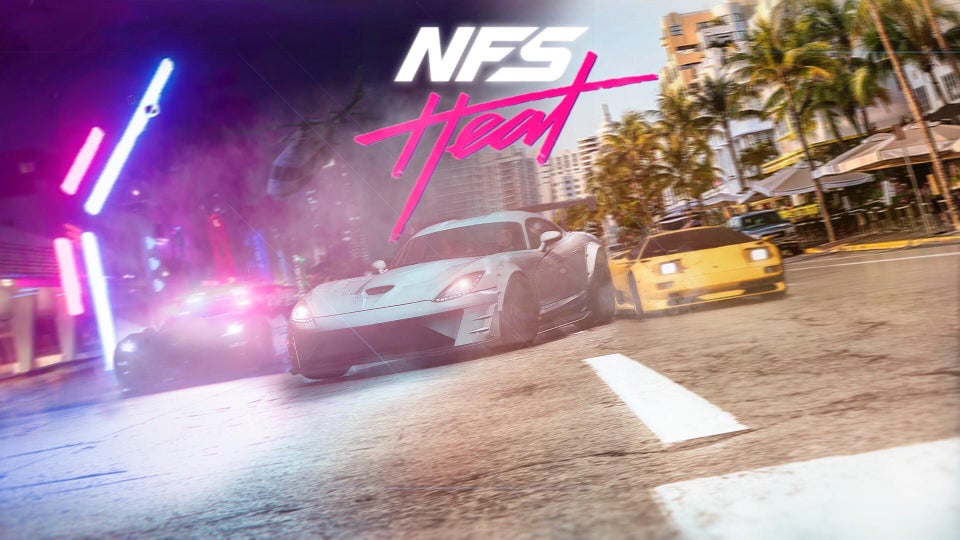
Need For Speed: Heat – a Review

Despite any major innovations, Ghost Games’ decisions to stick by the classic Racing Game formula shines.

Need For Speed: Heat is currently all I can think about. While still early in the game, its simple loop of beating other racers to acquire prize money, which in turn is spend on better and faster cars, has grasped my attention few other games had so far. Seeing those cars’ overall rating improve is just oh so satisfying.

This gameplay mechanic might not work as well if it wasn’t for NFS: Heat’s extensive collection of modern day super machines, or the fact that I haven’t play a real racing game since Need For Speed: Undercover on PS2. With 127 cars to chose from, car fanatics world-wide are treated to all of today’s fastest street-legal horses. This aspect is boosted further through available customization options; allowing players to swap beefier engines onto existing cars, improving their overall performance or dramatically change a car’s look with body parts. That’s not all. You can also rev your engine to hear the different in sounds these changes make, adjust the noise your muffler produce, and even access an online library of community-made wraps. All of which helps me feel as if I actually do own a Porsche 911 Carrera S.

The game is well-paced and puts story progression into the players’ hands. In moments where I was overwhelmed by my opponents’ speed, the game ensured that there were always other events of lesser difficulty that I can grind the dollars necessary to purchase a new engine or a brand new ride. This much needed break in play allows my eyes to rest after an intense 5-heat level race and think about which new upgrades I want.

One issue I do have with NFS: Heat, however, is the game’s drifting events. No, my complain isn’t with regards to the game’s drifting mechanic, it has to do with how pretty I look while performing them. Having completed 4 drifting quests thus far with flying colors, my Corvette looks like its GPS is being rerouted repeatedly during these events, rather than actually smoothly gliding through corners. Maybe my setup is wrong, maybe I am giving up too much grip in order to boost my drift-ability. But then, am I not being incentivize to give up more grip for drifting capabilities right now? I feel that a bit of guidance from the game could be included by the developer here to help gamers make more informed decisions. Especially when the more I play, the more I am believing that maxing out a car’s drift and road combination is clearly unnecessary.

Overall, the game is fantastic. The developers nailed the feeling of blurriness when a driver hits top-speed, cars cannot accelerate as quickly uphill, and even slower if the car is adjusted for more downforce. You’ll feel the weight of your vehicle when it slams into the ground after a high jump, and you for sure will feel those cops’ breath down your neck when they are chasing you. If you are like me (i.e. haven’t play a racing game since the PS2 days) or others on the Internet that loves NFS and its available customizations, but are sick of microtransactions, Need For Speed: Heat is for you.