
In the war between PC and console gaming, I have always been on the console’s side. Now, with the introduction of Stadia, a new player has emerged, game streaming. While both PC and console gaming required players to spill out a few hundred dollars before they could begin to enjoy their games, Google’s most recent technology will bypass this by allowing players to stream games onto their TVs, laptops, phones, and the available platforms for Stadia will only grow larger over time, that is, given Stadia is successful. I would argue, however, that while Microsoft and Sony should be cautious, together, they do not have anything to worry about. And here’s why.
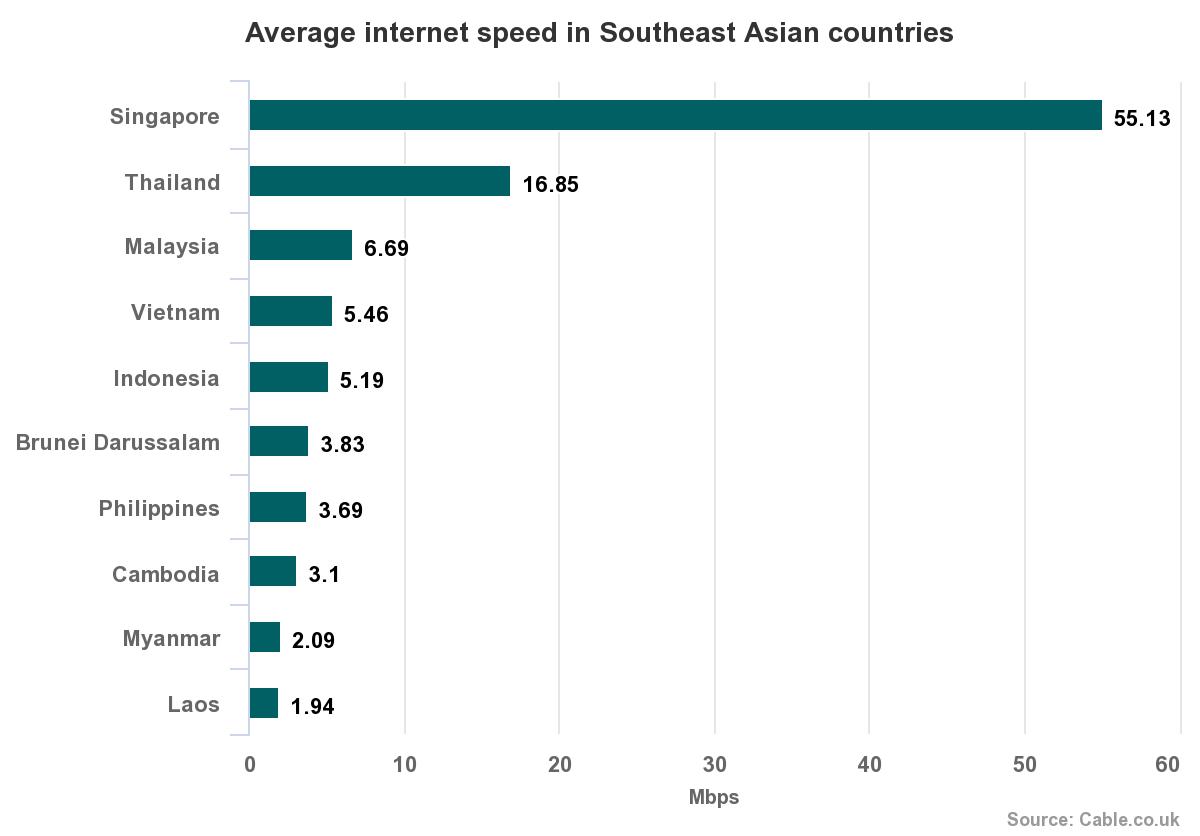
To start, Stadia does offer 4K, HDR at 60 FPS with 5.1 surround sounds. That is amazing. But, this is also fairly standard in the game industry now if you want to compete (except for Nintendo, as we all know). Here’s the catch. You will only be able to play your games in 4K at 35 Mbps. At 10 Mbps, you’ll be playing your game in 720, and who wants to play their game in 720p. Furthermore, what happens if your internet speed is less than 10Mbps. You simply just won’t run into those problems on a console. Here’s another factor to take into account. While 35 Mbps internet speed isn’t too difficult to acquire here in the U.S., this usually is not achievable elsewhere. Included in this post is also an image of the average internet speed in countries in South East Asia. As you can see, citizens of Singapore are the only people that are capable of playing Stadia games in 4K.
Another problem that Stadia might face has to do with the games themselves. In Stadia’s most recent Connect video, they introduced Baldur Gate 3. As a fan of any form of Role Playing games, whether it be table tops or in front of a screen, (and I admit, I have not played the Baldur Gate series) Baldur Gate 3 looks amazing. But aesthetic here isn’t the most important factor. The most crucial thing here to realize is that this is a game that is exclusive to Stadia (at least for now). While this is a good start, it is also a good thing that Stadia decided to host their Connect a few days before the start of the Electronic Entertainment Expo, E3. If Stadia had shown this at E3, they would not have achieved the same reaction and attention from the press. In order for them to compete in the U.S. and more developed countries in gaming, they will need to acquire first-party game developers, and they need to do so fast. And unless Stadia can start convincing more game developers to release their games simultaneously as they release them on consoles while acquiring first-party studios, Stadia will always be behind Microsoft and Sony.
While a subscription of $9.99/month and $69.99 for a Stadia controller isn’t much, I don’t see why Americans or British or New Zealanders would pay this price when they can’t access the most recent games the day, if not the week after it comes out.
I can, however, see this being a hit out of the park for developing nations. Due to stricter Intellectual Property Laws and tightening of these regulations in foreign countries, gaming has become a hobby for children of the elites. For example, a brand new PS4, not even a PS4 Pro, is $269.00 at Walmart. While that isn’t a lot for many of us here in America, that is the equivalent of over 6 million VND (Vietnam Dong). To put this in perspective, a Vietnamese college graduate with a good paying job, say in the finance sector, make at most 1 million VND per month. And this is the population that can realistically afford and enjoy videogames here in developed nations. I don’t know how Google would be able to bypass the idled internet speed issue in these countries, but then again, is there even enough money in these countries for Stadia to be interested in?
Sometimes I wish capitalism wasn’t so prevalent.
“I was born stupid. However, I will not die hungry. Videogames forever.” – Tim Rogers

 First Time Game Reviewer